
Pre-K for 4-Year-Olds
Prepare 4-year-olds for kindergarten with hands-on Pre-K learning, friendships, confidence, and creativity at The Learning Experience in Suwanee. Tour today.
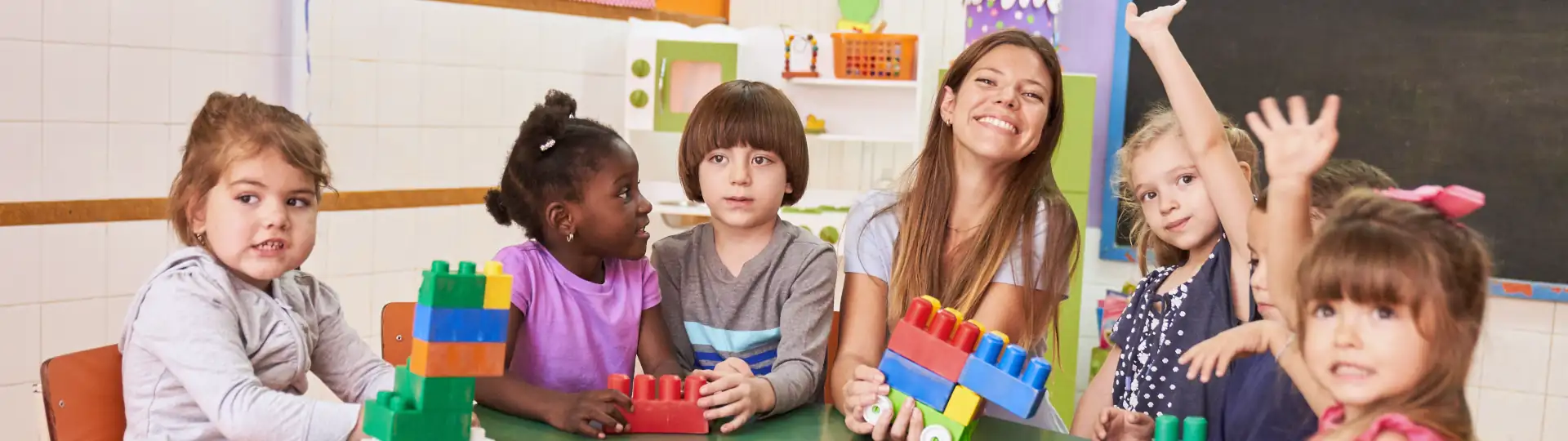
A Confident Start to Kindergarten Readiness
A Confident Start to Kindergarten Readiness
Four-year-olds are full of questions, ideas, stories, imagination, and growing confidence. They are learning to think more independently, communicate more clearly, work alongside friends, solve everyday problems, and take pride in what they can accomplish.
At The Learning Experience, our Pre-K program for 4-year-olds helps children build the academic, social, emotional, physical, and practical skills that support a successful transition into kindergarten.
Kindergarten readiness is about more than recognizing letters or counting to a certain number. Children also benefit from knowing how to listen in a group, follow routines, express their needs, take turns, manage emotions, complete tasks, ask for help, and approach a new challenge with confidence.
Our Pre-K classroom provides a joyful, engaging environment where children can strengthen those skills through hands-on learning, purposeful play, early academics, creative exploration, movement, meaningful friendships, and caring guidance from teachers who know them well.
Located near GA-316 and Collins Hill Road, we proudly serves Pre-K families in Suwanee, Buford, Lawrenceville, and nearby Gwinnett County communities.
Pre-K Learning With Purpose
At age four, children are ready to build on the skills they have already developed in preschool. They are beginning to understand more complex directions, participate in longer activities, express detailed thoughts, notice patterns, ask thoughtful questions, and work more intentionally toward a goal.
Here, learning is active and meaningful. Children do not simply hear about ideas—they explore them. They may measure ingredients during a classroom activity, create a plan for a block structure, write a name or journal entry, investigate a science question, practice a presentation, or collaborate with friends during dramatic play.
Our Pre-K program uses The Learning Experience’s proprietary L.E.A.P.® curriculum, a whole-child approach that brings together language and literacy, enrichment, academic foundations, physical development, and play. The program is designed to help children build intellectual, social, and cognitive skills through both structured learning and hands-on experiences
The L.E.A.P.® Approach
The curriculum is organized around four connected areas of learning:
- Language and Literacy: Vocabulary, phonemic awareness, letter-sound connections, storytelling, reading readiness, writing, and communication
- Enrichment and Experience: Music, art, STEM exploration, cultural awareness, imaginative play, and creative projects
- Academic Foundation: Early math, scientific inquiry, logical reasoning, problem-solving, and critical thinking
- Physical Development and Play: Fine-motor development, gross-motor movement, outdoor play, coordination, wellness, and healthy habits
This balanced approach gives children opportunities to become confident learners without taking away the joy, imagination, movement, and discovery that make early childhood meaningful.
Literacy, Phonics, and Writing Readiness
Pre-K is an important year for building early literacy skills. Four-year-olds are often becoming more interested in letters, sounds, books, rhymes, stories, and writing. Some children may begin recognizing familiar words or attempting to sound out simple letter sounds, while others are still developing confidence with language and print.
Our teachers meet children where they are and encourage steady progress through engaging, age-appropriate instruction. The goal is not to pressure children into mastering every skill on the same timeline. It is to help them become comfortable with language, interested in reading, and confident in their ability to communicate.
Your child may participate in literacy experiences such as:
Letter recognition and letter-sound practice
Phonemic awareness through rhymes, songs, and sound games
Interactive read-alouds and story discussions
Vocabulary-building activities
Name writing and early handwriting practice
Journaling, drawing, and storytelling
Listening and responding to questions about books
Predicting what may happen next in a story
Retelling familiar stories in sequence
Identifying print in the classroom environment
Sharing ideas during group discussions and presentations
For example, after reading a story about a garden, children may identify beginning sounds in flower names, sequence events from the story, count seeds, observe a real plant, draw what they notice, and dictate or write a short sentence about what plants need to grow.
The L.E.A.P.® curriculum identifies vocabulary, phonemic awareness, and early reading skills as foundational areas of language and literacy development.
Early Math and Critical Thinking
Four-year-olds are ready to explore math in more deliberate ways. They may count objects with greater accuracy, identify more shapes, notice patterns, compare quantities, sort materials, and begin using math language such as more, less, equal, bigger, smaller, before, after, and next.
At The Learning Experience, early math is taught through hands-on activities that make concepts concrete. Rather than asking children to memorize abstract information, teachers help them see and use math in everyday experiences.
Children may explore:
Number recognition and counting
One-to-one correspondence
More, less, equal, and comparison
Patterns and sequencing
Shapes, spatial awareness, and position words
Calendar, weather, and time-related routines
Sorting and classifying objects
Measurement using classroom materials
Simple addition and subtraction concepts
Logic, reasoning, and problem-solving
Graphing, organizing, and interpreting information
A building challenge, for instance, can introduce multiple early math concepts. Children may count blocks, compare tower heights, identify shapes, test balance, create patterns, and work together to solve the problem when a structure falls.
The Learning Experience includes mathematical concepts, scientific inquiry, and critical-thinking development as core elements of the L.E.A.P.® academic foundation.
STEM and Curiosity-Driven Discovery
Children are naturally curious. They ask why ice melts, how rain forms, why shadows move, what makes a bridge strong, and how a seed becomes a plant. Our Pre-K program encourages those questions and helps children understand that learning often begins with observation and curiosity.
STEM learning—science, technology, engineering, and math—helps children practice asking questions, making predictions, testing ideas, noticing outcomes, and trying again when something does not work the first time.
Pre-K STEM experiences may include:
Building and engineering challenges
Simple experiments with water, color, motion, magnets, or light
Nature walks and seasonal observations
Gardening and plant-life exploration
Sorting, measuring, and comparing natural materials
Exploring weather and the changing seasons
Observing insects, animals, and habitats
Using tools and materials safely with teacher guidance
Asking “What do you think will happen?” questions
Working collaboratively to design, test, and improve a creation
These experiences help children strengthen more than science knowledge. They also build perseverance, teamwork, communication, creativity, and flexible thinking.
The Learning Experience includes hands-on STEM activities and scientific inquiry as part of its enrichment and academic curriculum for preschool-aged children.
Social Skills and Emotional Readiness
A successful kindergarten transition requires social-emotional readiness as well as academic preparation. Four-year-olds benefit from learning how to work in a group, communicate clearly, manage disappointment, follow expectations, solve simple conflicts, and develop positive relationships with teachers and peers.
We help children practice these skills throughout the day. Social-emotional learning is integrated into classroom routines, group discussions, creative play, problem-solving, outdoor activities, and everyday interactions.
Creativity, Music, and Imaginative Play
Creativity remains essential at age four. While Pre-K children are developing stronger academic skills, they also need opportunities to imagine, create, move, perform, build, and express themselves.
Here, creative exploration is part of the learning process. Art projects can strengthen fine-motor control and decision-making. Music can support rhythm, memory, language, and group participation. Dramatic play can help children practice social skills, storytelling, and real-world problem-solving.
Your child may enjoy:
Painting, drawing, cutting, gluing, and collage
Music, rhythm, singing, and movement
Dramatic play and role-playing
Puppet stories and creative storytelling
Building with blocks, recycled materials, and classroom manipulatives
Seasonal projects and cultural learning experiences
Performing songs, poems, or class presentations
Collaborative art and group projects
Outdoor imagination games and active movement
The L.E.A.P.® curriculum includes music, art, cultural awareness, and hands-on enrichment experiences that complement early academics.
Movement, Wellness, and Physical Development
Four-year-olds need regular opportunities to move, play, strengthen coordination, and develop healthy habits. Active play supports physical development, but it also helps children release energy, practice teamwork, build confidence, and improve focus during quieter classroom activities.
Our Pre-K program includes developmentally appropriate gross-motor and fine-motor activities that help children prepare for both school routines and everyday life.
Gross-Motor Development
Children may practice:
- Running, jumping, climbing, and balancing
- Throwing, catching, kicking, and rolling balls
- Dancing, stretching, and movement games
- Outdoor playground activities
- Obstacle courses and cooperative challenges
- Yoga-inspired movement and body awareness activities
- Team-based games with simple rules
Fine-Motor Development
- Handwriting and name-writing practice
- Drawing, painting, and coloring
- Cutting with child-safe scissors
- Building, connecting, and sorting small materials
- Puzzles, games, and manipulatives
- Play dough, clay, and sensory materials
- Using utensils and participating in self-help tasks
- Buttoning, zipping, and fastening practice
The Learning Experience’s L.E.A.P.® approach includes both gross- and fine-motor development through structured activities, active play, and movement experiences.
A Day Designed for Growth
A predictable routine helps four-year-olds feel secure and ready to learn. Knowing what comes next gives children confidence during transitions and supports the self-regulation skills they will need in kindergarten.
At the same time, the Pre-K day should be engaging, flexible, and full of meaningful discovery. At Little Innovators, children experience a balance of familiar routines and varied learning opportunities.
A typical Pre-K day may include:
- Morning arrival and classroom greeting
- Group meeting or circle time
- Literacy, math, science, or thematic learning activities
- Learning centers and purposeful play
- Small-group instruction
- Art, music, and creative expression
- Meals or snacks
- Outdoor play and active movement
- Rest or quiet time
- Classroom jobs and responsibility-building routines
- Storytime, reflection, and end-of-day transitions
Exact schedules vary by classroom, center operations, seasonal programming, and the needs of enrolled children. During a personal tour, our team can provide the most current details about the daily Pre-K schedule.
Pre-K Near Suwanee, GA
We are proud to provide a local Pre-K option for families who want their child to enter kindergarten with more than academic exposure. We help children build the confidence, independence, curiosity, communication skills, and social readiness that support a positive start to elementary school.
Our school is conveniently located near GA-316 and Collins Hill Road, making it accessible for families in:
- Suwanee
- Buford
- Lawrenceville
- Sugar Hill
- Duluth
- Dacula
- Nearby Gwinnett County communities
We invite you to visit, meet our educators, see the classroom environment, and ask questions about what your child’s Pre-K experience could look like at The Learning Experience.
During your tour, ask our team about:
- Current 4-Year-Old Pre-K openings
- Enrollment timing and available start dates
- Daily schedules and classroom routines
- Literacy, math, STEM, and enrichment activities
- Teacher-family communication
- Meals, snacks, rest time, and outdoor play
- Tuition, registration, and enrollment requirements
- Kindergarten-readiness planning
- Health, safety, and center policies
Tuition, schedules, classroom offerings, availability, eligibility, and enrollment requirements are subject to change. Contact us directly for current information.
FAQs
Questions parents often ask
What age is the Pre-K Program for?
Our’ Pre-K program is designed for children who are approximately 4 years old. Exact classroom placement may depend on a child’s birth date, developmental readiness, local eligibility requirements, classroom capacity, and current program availability.
How does Pre-K prepare my child for kindergarten?
Pre-K helps children build foundational literacy, phonics, writing, math, science, problem-solving, communication, social-emotional, motor, and independence skills. Children also practice important classroom habits, including listening, following directions, participating in groups, managing transitions, completing routines, and working with peers.
Will my child learn letters, sounds, and writing?
Yes. Children participate in age-appropriate literacy experiences that include letter recognition, phonemic awareness, vocabulary, storytime, name writing, drawing, journaling, and early handwriting practice. Teachers support children at their individual developmental levels while helping them build confidence and interest in reading and writing.
Does your Pre-K program include play?
Yes. Purposeful play is an essential part of how young children learn. Our Pre-K program blends teacher-guided instruction with hands-on exploration, dramatic play, music, art, STEM activities, movement, outdoor play, learning centers, and social experiences.
Does your Pre-K program include play?
Click Schedule a Tour, call (470) 266-1111, or complete the school contact form. Our team can answer questions about Pre-K availability, tuition, enrollment timing, class schedules, kindergarten readiness, and next steps for your child.
Give Your 4-Year-Old a Confident Start
Your child is preparing for an exciting next chapter. The right Pre-K experience can help them enter kindergarten ready to learn, ready to make friends, ready to share ideas, and ready to believe in what they can do.
At The Learning Experience, we help four-year-olds strengthen the knowledge, habits, confidence, and curiosity that make a meaningful difference in kindergarten and beyond.
Come see how a joyful, hands-on Pre-K experience can help your child take their next big leap.