
L.E.A.P.® Curriculum in Suwanee, GA
Explore the L.E.A.P.® curriculum at The Learning Expereince in Suwanee—hands-on learning in literacy, STEM, creativity, movement, and more. Schedule a tour.

L.E.A.P.® Curriculum at The Learning Experience
Learning That Helps Children Learn, Play, and Grow
At The Learning Experience, we believe children deserve more than a classroom where they are simply cared for throughout the day. They deserve an environment that helps them feel safe, capable, curious, supported, and excited about learning.
That is why our programs are built around the proprietary L.E.A.P.® curriculum—the Learning Experience Academic Program. L.E.A.P.® is designed to support the whole child through hands-on experiences that build academic foundations, communication skills, creativity, social-emotional growth, physical development, and confidence.
From infant care through private kindergarten, children learn through purposeful play, guided discovery, meaningful routines, active movement, teacher-led instruction, enrichment experiences, and everyday encouragement from educators who get to know them well.
The curriculum is designed to help children build knowledge while also developing the skills that matter outside of academics: asking questions, making friends, solving problems, communicating needs, trying new things, and believing in what they can do.
We proudly serves families in Suwanee, Buford, Lawrenceville, and nearby Gwinnett County communities. Our school is conveniently located near GA-316 and Collins Hill Road.
What Does L.E.A.P.® Stand For?
L.E.A.P.® stands for Learning Experience Academic Program. It is The Learning Experience’s proprietary curriculum framework, designed to support children’s intellectual, social, cognitive, and physical development through age-appropriate learning experiences.
The curriculum is organized around four connected areas:

Language & Literacy
What It Supports
Communication, vocabulary, phonemic awareness, early reading, storytelling, and writing
Examples of Learning Experiences
Read-alouds, songs, rhymes, letter sounds, conversation, journaling, and story retelling
Enrichment & Experience
What It Supports
Creativity, cultural awareness, music, art, STEM, and imaginative learning
Examples of Learning Experiences
Art projects, music and movement, science exploration, building challenges, and dramatic play

Academic Foundation
What It Supports
Early math, scientific inquiry, reasoning, logic, and problem-solving
Examples of Learning Experiences
Counting, sorting, patterns, measurement, experiments, graphing, and puzzles

Physical Development & Play
What It Supports
Fine-motor skills, gross-motor skills, wellness, coordination, and active learning
Examples of Learning Experiences
Outdoor play, dance, climbing, handwriting practice, manipulatives, and movement games
The Learning Experience describes L.E.A.P.® as a hands-on curriculum that develops the whole child through academic, social, and cognitive learning. Its four core areas include language and literacy, enrichment and experience, academic foundations, and physical development through play.
These areas work together because children do not learn in separate categories. A child building a bridge with blocks may use math, science, language, creativity, fine-motor control, teamwork, and persistence—all within one meaningful activity.
Language and Literacy
Helping Children Find Their Voice
Language and literacy development begin long before a child reads their first book independently. Babies listen to voices and songs. Toddlers learn to name objects and express needs. Preschoolers begin recognizing letters, rhyming words, and story sequences. Kindergarteners strengthen reading, writing, comprehension, and communication skills.
At The Learning Experience teachers create a language-rich environment where children are encouraged to listen, talk, ask questions, share ideas, enjoy stories, and explore print in developmentally appropriate ways.
Depending on your child’s age and program, language and literacy experiences may include:
Songs, nursery rhymes, fingerplays, and sound games
Board books, picture books, read-alouds, and story discussions
New vocabulary connected to classroom themes
Letter recognition and letter-sound connections
Phonemic awareness through rhyming and beginning-sound activities
Early writing, drawing, journaling, and name practice
Storytelling, dramatic play, and puppet experiences
Listening, turn-taking, and speaking in group discussions
Early reading and comprehension activities for older children
Opportunities to communicate needs, feelings, observations, and ideas
For a young child, reading readiness may begin with holding a book, looking at pictures, repeating a favorite line, and hearing a teacher say, “What do you think will happen next?” For older preschool and kindergarten students, it can include phonics, early reading practice, writing, vocabulary, and comprehension strategies.
L.E.A.P.® identifies vocabulary, phonemic awareness, and early reading skills as central elements of its Language & Literacy component.
Enrichment and Experience
Learning Beyond the Basics
Children are naturally creative and curious. They want to make things, test ideas, move to music, ask questions, pretend, build, observe, and discover how the world works.
The Enrichment & Experience component of L.E.A.P.® gives children opportunities to explore learning through art, music, STEM, culture, imaginative play, and interactive projects. These experiences can make abstract concepts more memorable because children are actively participating rather than only listening.
At The Learning Experience, enrichment may include:
Music, singing, rhythm, and movement activities
Painting, drawing, collage, sculpture, and sensory art
Dramatic play and imaginative storytelling
STEM experiments and science observations
Building and engineering challenges
Nature exploration and outdoor discovery
Cultural awareness and community-themed learning
Classroom projects connected to seasons, books, or real-world topics
Presentations, performances, and age-appropriate leadership opportunities
Collaborative projects that encourage teamwork and communication
For example, a class exploring weather may read a story about rain, observe clouds outdoors, create rain art, sort clothing for different weather conditions, discuss safety during storms, and build a simple structure to test how it handles water. One topic can support literacy, science, art, math, communication, and problem-solving.
The Learning Experience includes music, art, STEM activities, and cultural awareness as part of the Enrichment & Experience area of L.E.A.P.®.
Academic Foundation
Building Skills Through Discovery
Academic learning in early childhood should feel meaningful, interactive, and connected to a child’s daily life. We help children build academic foundations through hands-on activities that encourage them to observe, compare, experiment, plan, question, and solve problems.
This does not mean expecting young children to learn like older students. It means introducing age-appropriate concepts in ways that make sense for how children learn best: through play, movement, repetition, conversation, and discovery.
Academic Foundation activities may support:
Number recognition and counting
Sorting, matching, classifying, and comparing
Shapes, colors, measurement, and spatial awareness
Patterns, sequences, and logical reasoning
Simple addition and subtraction concepts for older learners
Graphing, data awareness, and classroom surveys
Scientific observation and inquiry
Cause-and-effect learning
Exploration of nature, weather, plants, animals, and materials
Engineering through building, balancing, testing, and redesigning
Problem-solving through puzzles, games, and classroom challenges
A child who notices that a taller block tower falls down may be learning early engineering. A child who groups buttons by color is practicing sorting and classification. A kindergartener who records the weather each morning is building data awareness, observation skills, and communication.
L.E.A.P.® describes its Academic Foundation area as developing mathematical concepts, scientific inquiry, and critical-thinking skills.
STEM for Young Innovators
science, technology, engineering, and math
Young children need movement. They need time to run, climb, dance, stretch, build, carry, draw, cut, stack, and explore. Physical activity helps children develop coordination, balance, strength, body awareness, confidence, and healthy habits.
At The Learnng Experience, physical development and play are essential parts of the day—not an afterthought. Children need opportunities for active movement, but they also need fine-motor experiences that help prepare them for self-care tasks, creative projects, writing, and classroom participation.
Gross-Motor Development
Gross-motor skills involve large-muscle movements. Depending on a child’s age, they may practice:
Tummy time, crawling, cruising, and early walking
Walking, running, jumping, and balancing
Climbing and navigating age-appropriate equipment
Throwing, catching, kicking, and rolling balls
Dancing and moving to music
Outdoor playground exploration
Obstacle courses and movement challenges
Yoga-inspired stretches and body-awareness activities
Cooperative games that encourage listening and teamwork
Fine-Motor Development
Fine-motor skills involve the hands and fingers. They support important lifelong tasks such as feeding, dressing, drawing, writing, manipulating objects, and using tools.
Children may strengthen fine-motor control through:
Reaching, grasping, transferring, and stacking
Crayons, markers, paintbrushes, and early mark-making
Play dough, clay, and sensory materials
Simple puzzles and manipulatives
Scooping, pouring, sorting, and threading
Cutting with child-safe scissors
Building with blocks and connecting materials
Handwriting practice for Pre-K and kindergarten learners
Dressing, fastening, feeding, and other self-help routines
The Learning Experience identifies structured activities and free play as ways L.E.A.P.® strengthens both gross- and fine-motor skills.
A Curriculum That Grows With Your Child
Your child’s learning needs change significantly from infancy through kindergarten. A baby needs responsive care and sensory discovery. A toddler needs movement, language support, and consistent routines. A preschooler needs opportunities to communicate, form friendships, create, and explore early academic concepts. A Pre-K or kindergarten student needs increasing challenge, independence, and classroom-readiness experiences.
L.E.A.P.® is designed to provide developmentally appropriate learning at each stage while maintaining a consistent whole-child philosophy.
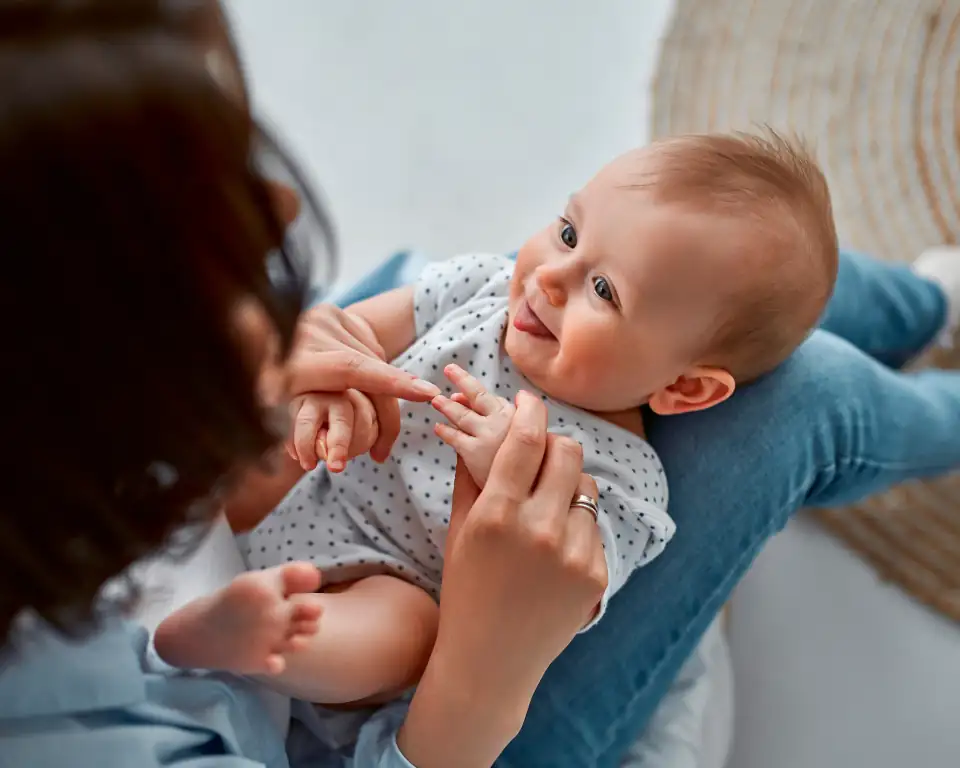
Infant Care | 6 Weeks–15 Months
In infant classrooms, L.E.A.P.® supports early development through responsive care, sensory exploration, movement, music, simple stories, language exposure, and nurturing relationships. Babies learn through the everyday moments that help them feel safe and curious.
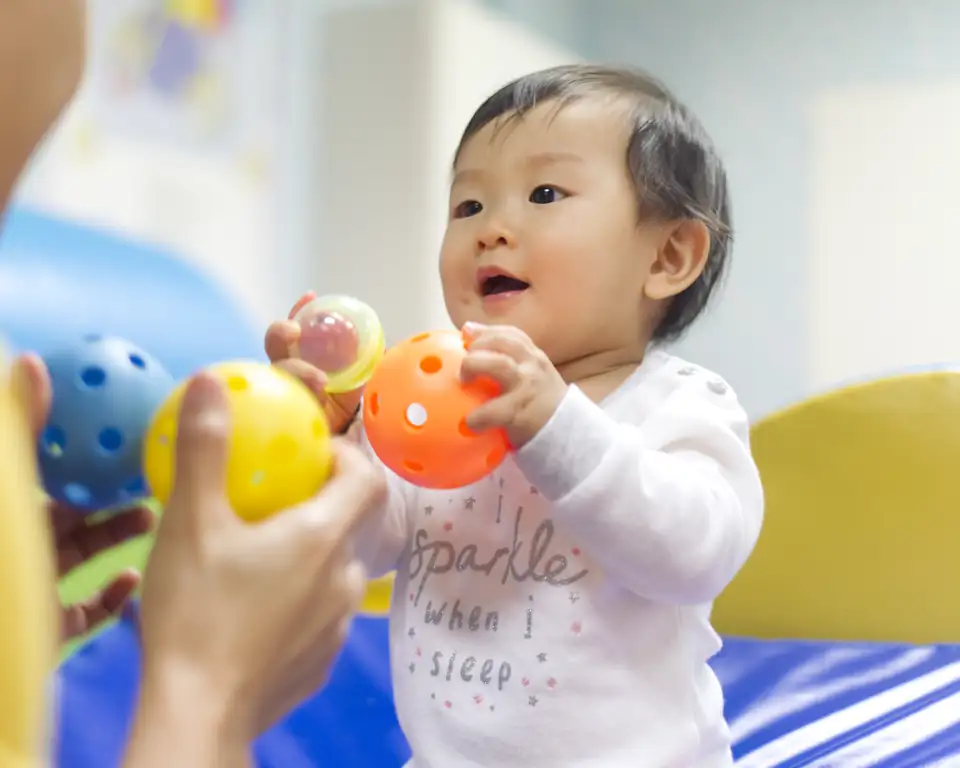
Toddler Care | 15 Months–2 Years
Toddlers build communication, movement, social awareness, and independence through purposeful routines, songs, stories, sensory experiences, art, active play, and teacher-guided exploration.

Twos Program
Two-year-olds practice language, friendship skills, emotional expression, early literacy awareness, problem-solving, self-help routines, music, art, and movement. Their growing independence is supported with patient guidance and age-appropriate choices.

Preschool | Threes
Three-year-olds engage with early literacy, number concepts, imaginative play, STEM exploration, creative expression, classroom routines, and social-emotional learning. Curiosity takes center stage as children begin seeing themselves as capable learners.

Pre-K | Fours
Four-year-olds strengthen kindergarten-readiness skills in phonics, writing, math, science, communication, problem-solving, independence, teamwork, and self-regulation. Learning remains hands-on, active, and engaging.

Private Kindergarten | Ages 5–6
Kindergarten students build advanced literacy, writing, math, STEM, science, social studies, social-emotional, wellness, and first-grade-readiness skills. They also strengthen the confidence and responsibility needed for their next academic chapter.
Character, Confidence, and Social-Emotional Growth
A child’s success is about more than what they know. It is also about how they see themselves, how they treat others, and how they approach challenges.
At The Learning Experience, social-emotional development is integrated throughout the day. Children learn how to recognize feelings, communicate needs, work with others, wait for a turn, recover from disappointment, make choices, show kindness, and persist when something feels difficult.
Teachers support these skills in real-life moments, including during classroom projects, learning centers, outdoor play, transitions, mealtimes, and friendship challenges.
FAQs
Frequently Asked Questions About L.E.A.P.®
What does L.E.A.P.® stand for?
L.E.A.P.® stands for Learning Experience Academic Program. It is The Learning Experience’s proprietary early childhood curriculum designed to support the whole child through language and literacy, enrichment experiences, academic foundations, and physical development through play.
Is L.E.A.P.® only focused on academics?
No. L.E.A.P.® combines age-appropriate academic experiences with art, music, STEM, movement, outdoor play, social-emotional development, character learning, creativity, and hands-on exploration. The goal is to help children develop intellectually, socially, cognitively, physically, and emotionally.
How does L.E.A.P.® support infants and toddlers?
For infants and toddlers, the curriculum emphasizes responsive care, early communication, sensory discovery, movement, music, stories, social connection, routines, and age-appropriate exploration. Activities are adapted to each child’s developmental stage and individual needs.
Does the curriculum help prepare children for kindergarten?
Yes. As children move through each program, L.E.A.P.® builds skills in language, literacy, math, science, problem-solving, social-emotional learning, independence, and physical development. Pre-K and private kindergarten experiences are designed to strengthen kindergarten and first-grade readiness through hands-on, age-appropriate learning.
How can I learn more about the curriculum at The Learning Experience?
Schedule a personal tour, call the school, or complete our contact form. During your visit, our team can explain how L.E.A.P.® is used in your child’s classroom, what a typical day includes, and which program may be the right fit for your family.
See Learning Come to Life
A great early education should help children feel confident, curious, supported, and ready to take their next big step. At Little Innovators, the L.E.A.P.® curriculum brings learning to life through language, discovery, creativity, movement, friendships, and purposeful play.
Come see how our classrooms help children learn, play, and grow—from their first days in infant care through their first steps toward first grade.
Why Families Choose The Learning Center
Families want a school that understands their child as a whole person—not just a student or a spot in a classroom. They want an environment where early academics are valued, but where joy, creativity, movement, relationships, and play still have an important place.
We provide a local learning community where children can be encouraged to grow at every stage.
Our team is happy to answer questions about classroom routines, current program availability, enrollment timing, tuition, teacher communication, curriculum experiences, and age-based placement.
Tuition, availability, program offerings, classroom schedules, enrollment eligibility, and curriculum details are subject to change. Contact Little Innovators directly for current information.